
On Digital Exposure, Power, and Modern Risk
February 12, 2026 5:33 pm Leave your thoughts
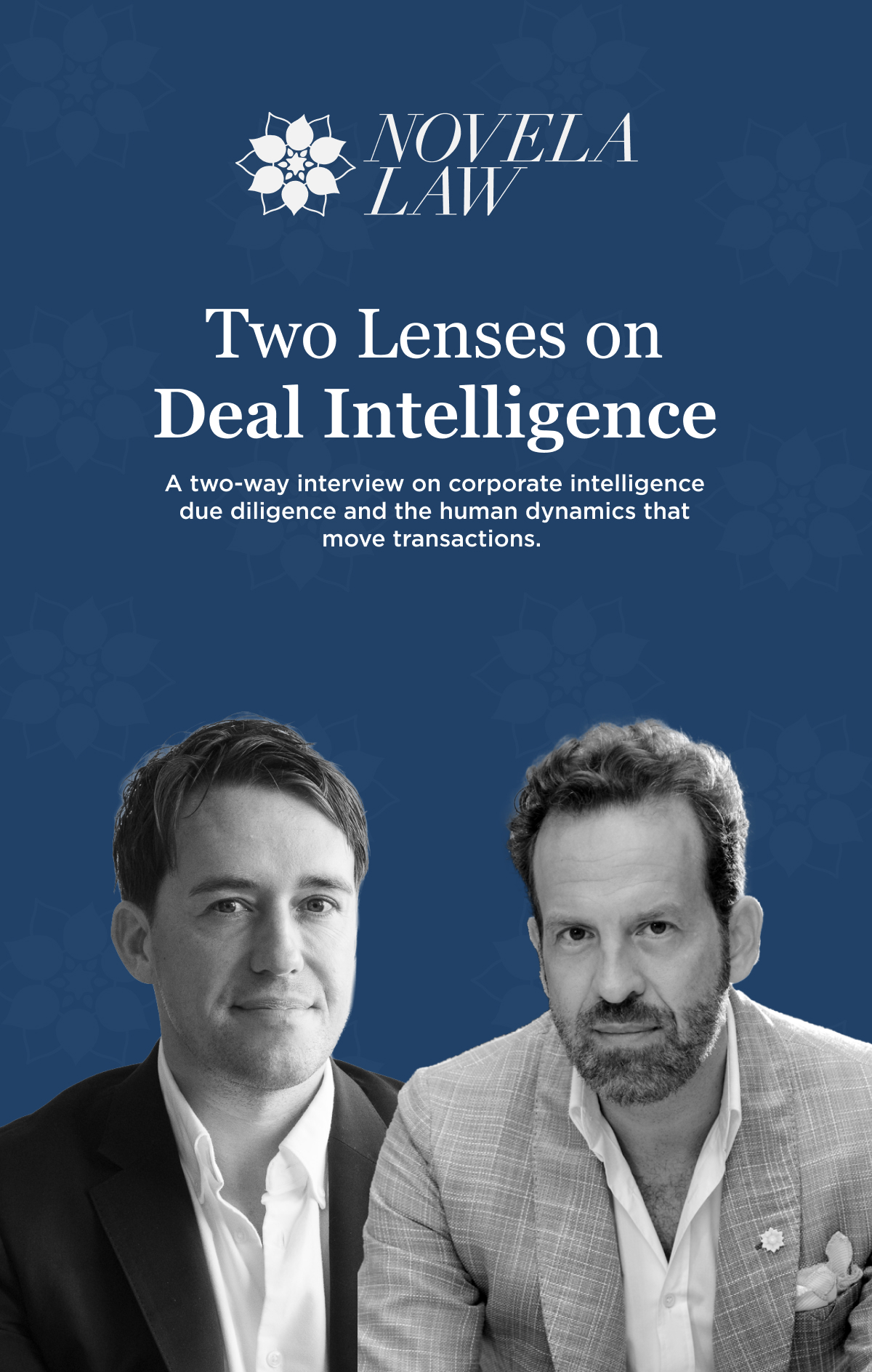
A conversation with Cameron Colquhoun, former British intelligence officer and Founder & Chief Executive of NEON CENTURY.
In today’s business environment, risk doesn’t always surface through balance sheets, contracts, or formal disclosures. More often, it lives quietly across the internet, either through public records, metadata, forgotten profiles, or casual digital behavior that feels private but isn’t.
For this month’s newsletter, I sat down with Cameron Colquhoun to discuss how executives, founders, and investors are increasingly exposed long before any deal reaches the negotiation table. With a background in British Intelligence and extensive experience advising private equity firms and corporate clients, Cameron works at the intersection of information, power, and decision-making.
What follows is a direct Q&A from our conversation, exploring how publicly available data can materially influence deals, reputations, and leverage, without a single system ever being hacked.
Q1: The Wake-Up Call
“Cameron, you’ve called WhatsApp an ‘illusion of privacy’ and podcasts a ‘confession booth.’ For business owners and executives conducting deals or sensitive negotiations, what’s the single biggest misconception about their digital exposure?”
During my time working in British Intelligence, I was often asked to think about the worst possible outcomes and work backwards from there. The same thinking can be applied to the corporate sector. Throughout my career, I’ve helped many executives think through how adversaries could use pieces of information littered around the web their against them. They are often naïve about risks to their business or reputation.
In one instance, we’re doing a deep dive for a PE fund acquiring a start up. We uncovered a profile on a golf club website for the start up’s CEO. He had a handicap of 3, which is professional grade, and suggests he spent a lot of time on the golf course. The deal didn’t go through. In another case, we found a property belonging to two board members of a public company, and on further investigation we found they were in a personal relationship, which was
very important to know as our client was investing in the company and needed to understand the dynamics of the board.
The key takeaway here: seemingly innocent fragments of information littered around the web allow our clients to build up a detailed picture and can often significantly shift the outcome of a deal.
Q2: The Threat Made Concrete
“Walk us through what a sophisticated adversary, whether opposing counsel, a competitor, or a short seller, could actually learn about one of my clients without ever hacking anything, just from publicly available information and metadata.”
We are paid on a weekly basis to do this type of work. In a short space of time we could find out where you go running (Strava accounts are often public or leaked), secondary social media profiles or forum accounts (even if they are under alias), leaked passwords, Google review history, vehicles (including VIN numbers), police reports, high school yearbook entries, deleted tweets, political donations, all property records, close friends and colleagues, financial investments, WhatsApp profile pictures, and so on.
Q3: The Action Plan
“If a corporate client called you tomorrow saying they want to acquire a new business, what are the first three things you’d tell them to do?”
1. Prior to the investment committee meeting, I’d suggest they do deep dives on the executive team — founder, CEO and CFO usually. You would be amazed how often we find strange things.
2. We would advise assessing the cyber infrastructure of the company, to validate its health and resilience.
3. If there are major corporate assets (e.g. private jets, properties), we usually run checks on their use, locations, ownership, etc. to ensure it’s consistent with the acquiree’s policies.
Finally, if we find anything unusual re 1–3, it allows our client to negotiate down the sale price.
Closing Thoughts
In a market where leverage is increasingly shaped by information, digital exposure has become part of modern due diligence, whether acknowledged or not.
This conversation isn’t about paranoia. It’s about awareness. Because today, the most consequential risks are rarely hidden. They’re simply overlooked.
Categorised in: News
This post was written by Daniel Novela
